French country towns as strategic laboratories for tourism product development
Across rural France, small historic towns and villages are becoming strategic laboratories for tourism product development. For destination managers, each market town or village centre offers a compact testing ground where heritage, landscape, and hospitality can be combined into exportable models for other rural communities. These intimate places allow agile experimentation with new visitor experiences while keeping risks, costs, and stakeholder complexity under control.
Many of these French country towns have medieval cores, winding cobblestone lanes, and timber-framed houses that already attract visitors, yet the tourism offer often remains limited to a short visit and a photo stop. When a town or small city relies only on its beautiful church or its main square, the average time spent on site rarely exceeds a few hours, which caps both revenue and local employment. Tourism product development must therefore extend the stay through curated itineraries, themed micro-events, and services that transform a quick visit into an overnight trip or even a multi-day road trip across several rural towns in France.
In this context, bastide towns with their grid layouts offer a powerful template for walkable circuits that connect key assets such as the local église Saint-Pierre, the covered market hall, and the surrounding vineyards. A single village can host a sequence of experiences in less than one square kilometre, from tasting in a cellar to a guided walk along cobblestone streets lined with half-timbered façades. When several nearby villages in France coordinate their offers, visitors will find coherent routes that link one heritage site to another, multiplying reasons to stay longer and spend more.
Designing multi town itineraries that rebalance flows across regions
For offices de tourisme and regional agencies, the real leverage lies in connecting multiple French country towns into themed itineraries. Instead of promoting a single village or small town in isolation, product development should focus on clusters of towns and villages that share a narrative, such as wine, medieval history, or sacred architecture. This approach spreads benefits across territories and reduces pressure on a single beautiful place that may already be saturated at peak time.
In Burgundy, for example, a route linking a small city on the Côte de Nuits with nearby wine villages in eastern France can combine vineyard walks, visits to Romanesque église Saint-Martin chapels, and tastings in traditional houses built in stone and timber. The same itinerary can connect to Colmar and its colourful half-timbered houses, then continue south towards other wine towns in France such as Eguisheim or Kaysersberg, creating a cross-regional road trip that feels coherent for international visitors. Such multi-stop products encourage travellers to visit lesser-known towns and villages, where they will find quieter streets lined with local shops and more authentic contact with residents.
Regional boards can draw inspiration from European case studies on visitor redistribution, such as strategies used in the Austrian Tirol or South Tyrol to shift demand into shoulder seasons. By adapting similar pricing, programming, and transport tactics to French country towns, destinations can move visitors from a single iconic city towards a network of small towns and villages. Over time, this rebalancing strengthens local economies, protects fragile heritage, and offers a more comfortable experience on those winding cobblestone streets that define rural France.
From medieval heritage to contemporary experiences in French country towns
Most French country towns carry layers of medieval, Renaissance, and modern history that can be translated into contemporary tourism products. A town with a fortified gate, a market square, and an église Saint-Jean dedicated to a local patron already has the raw material for storytelling that goes far beyond a simple guided tour. The challenge for offices de tourisme is to turn this heritage into immersive experiences that speak to today’s travellers without distorting historical truth.
Take a village in southern France such as Cordes-sur-Ciel, with winding cobblestone streets leading up to a hilltop church and a small château. Instead of offering only a daytime visit, the destination can stage night-time walks with subtle lighting on the stone houses, short performances about Joan of Arc or other historical figures, and tastings of regional products in private courtyards. In winter, the same village can host a Christmas market that highlights local crafts, transforming the town into a seasonal attraction while respecting its scale and identity.
Another example is a small city near the Champagne region, such as Épernay, that integrates its wine heritage with its religious architecture, including a local Notre-Dame church or a smaller église Saint-Germain. Here, tourism product development can link cellar visits, organ concerts, and temporary exhibitions into a single pass, encouraging visitors to spend more time and money in the town. Destination leaders can also learn from creative approaches abroad, such as those analysed in research on turning unusual cultural facts into premium experiences, then adapt similar methods to the specific stories of villages in France.
Building infrastructure that respects scale and character in small towns
Tourism product development in French country towns fails when infrastructure overwhelms the scale of the place. A small town with 1,500 residents cannot absorb the same volume of coaches, cars, and day-trippers as a regional city, especially when its streets are narrow and its houses are fragile. Infrastructure planning must therefore start from the carrying capacity of the town and village, not from abstract visitor targets.
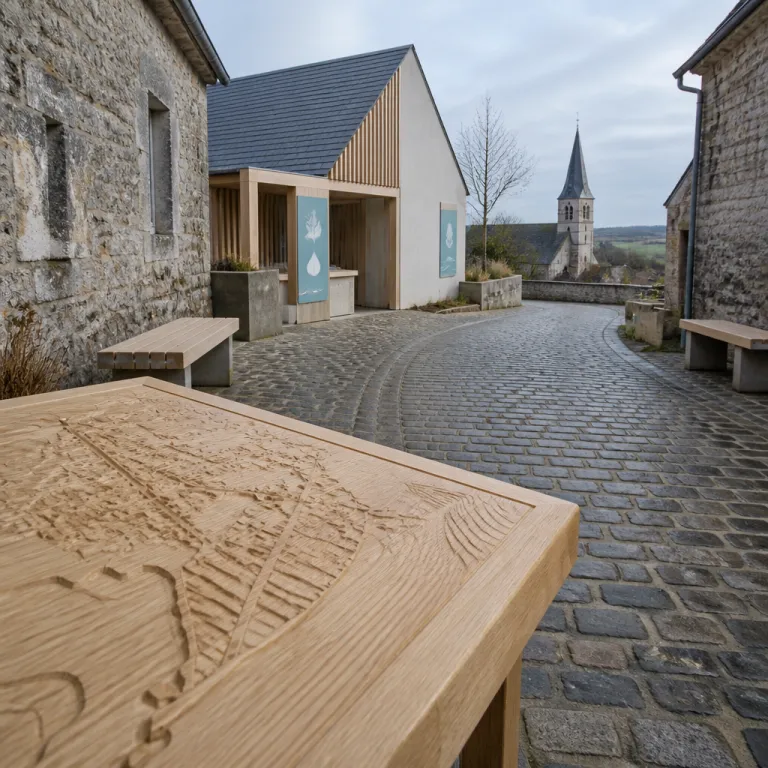
Parking, signage, and visitor centres should be positioned at the edge of the historic core, allowing guests to enter on foot through cobblestone streets that preserve the medieval atmosphere. In many rural towns in France, simple interventions such as discreet wayfinding, shaded rest areas, and accessible paths along winding cobblestone lanes can dramatically improve the visit without heavy construction. When a village invests in small-scale mobility solutions, such as electric shuttles or shared bicycles, it becomes easier to link several villages in France into a single trip while keeping traffic out of the most sensitive streets lined with heritage façades.
Heritage site management also requires careful coordination between municipal services, cultural institutions, and private actors. A town that hosts a UNESCO World Heritage church or a candidate site must align opening hours, ticketing, and interpretation across all attractions, so that visitors will find a coherent experience rather than a patchwork of isolated visits. As one reference explains, a bastide town is a medieval town with a grid layout, and these bastide layouts can guide the design of visitor flows, emergency access, and event logistics in many French country towns.
Governance models that align public and private interests
Effective tourism product development in French country towns depends on governance models that align the interests of offices de tourisme, collectivités, and private entrepreneurs. A single town or village rarely has the resources to manage marketing, infrastructure, and product design alone, especially when competing with a nearby city. Intercommunal structures and regional clusters can pool expertise while leaving room for each small town to express its identity.
One practical approach is to create thematic working groups that bring together hoteliers, restaurateurs, guides, and cultural institutions from several towns and villages. These groups can co-design itineraries that link, for example, half-timbered quarters in Colmar, wine villages in Burgundy, and small city centres in southern France, ensuring that each place contributes a distinctive experience. Offices de tourisme can then coordinate shared tools such as booking platforms, joint passes, and storytelling guidelines that highlight the most beautiful streets and houses without overpromising.
To reinforce trust, regional boards should adopt transparent criteria for investment in heritage site restoration, mobility, and public space upgrades. Resources can be prioritised for rural towns in France that commit to sustainable practices and to quality standards in accommodation and guiding. For a structured view of which sustainability certifications genuinely support this strategy, tourism leaders can refer to recognised guides on the credibility hierarchy of destination sustainability certifications, then apply the most relevant labels to French country towns and nearby villages.
Seasonality, storytelling, and the art of extending the stay
Seasonality remains one of the most persistent challenges for French country towns, where activity often peaks in summer and during Christmas markets. To stabilise local economies, tourism product development must create reasons to visit in spring and autumn, and even on selected winter weekends. This requires a calendar of events and micro-experiences that feel authentic to each town and village, rather than imported festival formats.
Storytelling is a powerful tool here, especially when anchored in specific streets, houses, and characters. A small town associated with Joan of Arc, for example, can design a series of walks, performances, and educational workshops that bring her story to life across different seasons, using both indoor and outdoor spaces. Another village in southern France might focus on its agricultural cycle, inviting visitors to join pruning, harvest, or truffle events that lead them through winding cobblestone paths and out into the surrounding landscape.
To extend the average length of stay, destinations should package accommodation, gastronomy, and activities into themed short breaks that connect several towns in France. A two-night road trip might start in a small city with a Notre-Dame church, continue through wine villages in the Champagne region, and end in a medieval bastide town such as Monpazier, with perfectly preserved cobblestone streets lined with arcades. When visitors find clear information, easy booking, and consistent quality across these French country towns, they are far more likely to return and to recommend the experience to others.
Key figures and strategic statistics for French country towns
- France counts around 500 bastide towns, according to French Waterways, which gives regional planners a large network of medieval grid towns to integrate into multi-stop itineraries.
- In many French country towns, average visitor stays remain under one day, which limits local tourism revenue compared with city breaks where travellers typically stay two or three nights.
- Rural communes represent more than half of the national territory, yet they capture a significantly smaller share of total overnight stays, highlighting the growth potential for small town and village products.
- UNESCO World Heritage sites in France attract millions of visitors annually, and nearby towns and villages within a 30 kilometre radius can benefit from spillover demand when they offer complementary experiences.
- Studies by Atout France show that international visitors rate “authentic villages and small towns” among the top motivations for a trip, confirming the strategic importance of French country towns in national branding.
FAQ about tourism product development in French country towns
What is a bastide town and why does it matter for tourism ?
A bastide town is a medieval town with a grid layout, which makes it ideal for designing clear visitor circuits and thematic walks. The regular street pattern helps manage flows, signage, and event logistics in a way that protects sensitive heritage. For tourism leaders, bastides offer ready-made frameworks for curated experiences in French country towns.
Why visit French country towns instead of focusing only on major cities ?
French country towns and villages offer concentrated heritage, local gastronomy, and quieter atmospheres that many travellers now prefer to large cities. They often combine medieval streets, traditional houses, and surrounding landscapes within walking distance, which creates high-value experiences with low transport impact. For destinations, promoting these towns diversifies revenue and reduces pressure on overcrowded urban centres.
How can small towns manage visitor flows on narrow cobblestone streets ?
Small towns can place parking and coach drop-offs outside the historic core, then guide visitors along designated walking routes. Timed entries for key heritage sites, clear wayfinding, and small-group guided tours help avoid congestion on winding cobblestone lanes. Collaboration between municipal services and private operators is essential to align opening hours and event schedules.
What role do local communities play in tourism product development ?
Local residents and businesses are central to creating authentic experiences in French country towns. They provide stories, crafts, gastronomy, and services that give meaning to the built heritage. Involving them early in planning processes increases acceptance of tourism and generates ideas that external consultants might overlook.
How can regions link several villages into a coherent tourism offer ?
Regions can identify shared themes such as wine, religious heritage, or medieval architecture, then design itineraries that connect multiple villages and small cities in France. Joint branding, integrated transport information, and common quality standards make the route feel seamless for visitors. Offices de tourisme can coordinate marketing while allowing each town and village to highlight its unique assets.