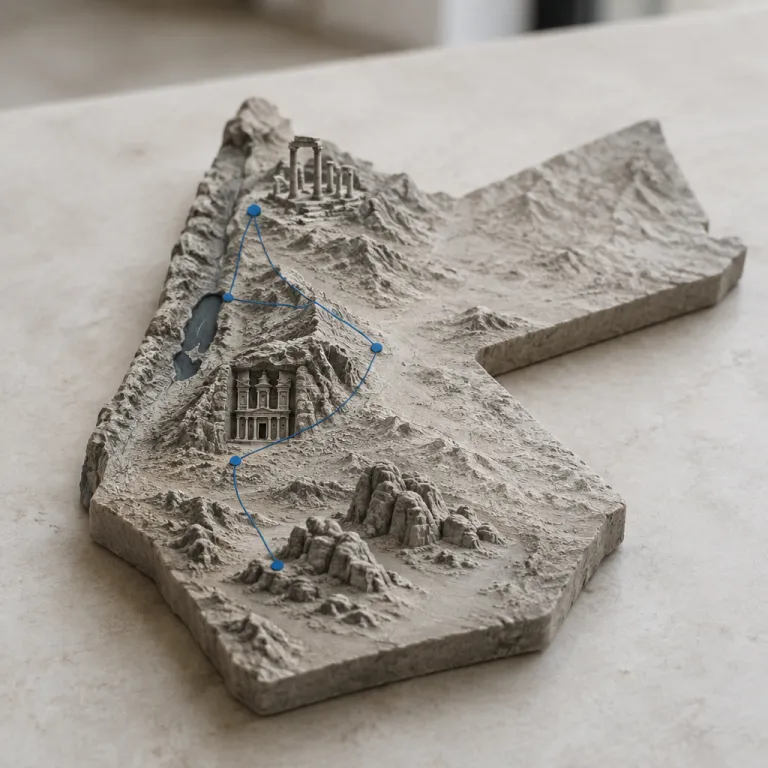
Positioning things to see in Jordan as a coherent national product
For destination leaders, the most compelling things to see in Jordan form a single, high value tourism product rather than a loose list of attractions. When the country is framed as a connected journey between Petra, Wadi Rum, the Dead Sea and the Roman city of Jerash, offices de tourisme can move from simple promotion to real tourism product development. This shift allows every city, reserve and desert area to contribute to a shared Jordan bucket of experiences that supports longer stays and higher local spending.
Petra remains the emotional anchor of most trip Jordan itineraries, yet many visitors still treat it as a one day trip instead of a multi day cultural immersion. According to the Jordan Tourism Board, Petra alone welcomed over one million visitors in 2023, but average time on site is still often limited to a single day. By curating themed routes that link Petra with Shobak Castle, the desert castles of the eastern plateau and the Dana Biosphere Reserve, regional agencies can transform isolated sites into top places that feel like a single, well designed trail. Such integrated planning ensures that the best things to see in Jordan are experienced in sequence, with each place reinforcing the next and extending time spent across the country.
Amman plays a different but equally strategic role in this national product, acting as both gateway city and cultural hub. From the capital, distances are manageable, with around 61 km to the Dead Sea and roughly 235 km to Petra, which makes it easy to structure places to visit as a series of well timed loops. As one Amman-based guide explains, “If visitors understand that nothing is more than a few hours away, they relax and add an extra night.” When offices de tourisme in Amman coordinate with regional partners, they can guide visitors toward lesser known places to visit such as Umm Qais or rural eco lodge stays, balancing flows away from the most saturated sites.
Designing themed routes around Petra, Jerash and the desert castles
For tourism boards seeking to elevate things to see in Jordan, themed routes are one of the best tools to turn iconic sites into complete experiences. A heritage focused itinerary might start in Amman, continue to the Roman ruins of Jerash, then move north to Umm Qais before looping back through the eastern desert castles and finally down toward Petra and Shobak Castle. Such a route gives visitors a clear narrative of the country, from classical antiquity to Islamic architecture and Nabataean engineering, while distributing overnight stays across several city hubs.
Another powerful approach is to structure a cross regional trail that links sea and desert, using the Jordan Trail as a backbone for slower travel. Hikers can follow selected sections of this long distance trail from the Dana Biosphere Reserve down to Petra, then on toward Wadi Rum and eventually the Red Sea coast at Aqaba, with each segment framed as one of the best things to see in Jordan for active travellers. Offices de tourisme can package these segments as modular products, allowing visitors to choose a two day trip, a week long trek or a full country crossing depending on their time and fitness.
Food, wine and cultural storytelling can further enrich these routes and raise their value for high spending markets. Destination leaders who study how fortified Sicilian wine has been used as an anchor for high value tourism product development, as analysed in this article on using a flagship product to structure premium itineraries, will see clear parallels with Jordanian olive oil, dates or Bedouin cuisine. A practical illustration is the way some Petra-area guesthouses now pair guided site visits with home cooked zarb dinners and olive oil tastings sourced from the Ajloun region. By positioning Petra, Jerash and the desert castles as stages in a broader cultural tasting journey, regional agencies can encourage visitors to extend their trip Jordan plans and add more places to visit to their personal bucket list.
Leveraging Wadi Rum, the Dead Sea and the Red Sea for nature based products
Nature based experiences are now central to how international travellers evaluate things to see in Jordan, and this creates both opportunities and responsibilities for destination managers. Wadi Rum, the Dead Sea and the Red Sea each offer distinct ecosystems, yet they can be combined into a single nature corridor that runs from high plateau to coral reef. When offices de tourisme frame this corridor as one of the top places in the Middle East for soft adventure, wellness and marine life, they can attract visitors who stay longer and travel further across the country.
Wadi Rum is already famous for its monumental sandstone massifs and cinematic desert landscapes, where guided 4×4 tours, hiking and overnight stays in Bedouin camps are among the best things to experience. The official description that it is a “desert valley with sandstone formations” helps tourism teams communicate clearly what makes this wadi unique while still leaving room for local storytelling. A micro-case often cited by planners is the evolution of Bedouin-run camps that shifted from unregulated wild camping to structured, low impact tented sites with capped capacity and trained local guides. By integrating Wadi Rum with nearby eco lodge options and with the Dana Biosphere Reserve, regional planners can create multi day desert and biosphere reserve itineraries that appeal to both adventure seekers and nature lovers.
The Dead Sea and the Red Sea complement this desert offer with contrasting water based experiences that belong on any Jordan bucket list. The Dead Sea, described accurately as having the “lowest land elevation; floats due to high salt content”, supports wellness products, while the Red Sea coast at Aqaba offers diving on coral reefs that are among the most accessible in the region. UNESCO has highlighted the ecological importance of Red Sea coral systems, and Jordanian marine reserves draw on this research to shape visitor limits and mooring rules. Destination leaders can draw inspiration from guidance on strategic nature and wildlife journeys for destination leaders to design responsible, small group products that protect fragile marine and desert environments while still showcasing these things Jordan is rightly famous for.
Embedding eco lodges and biosphere reserves in regional development
Eco lodge development around protected areas is one of the most effective ways to turn natural things to see in Jordan into long term economic engines for rural communities. The Dana Biosphere Reserve, already recognised as a leading biosphere reserve in the region, offers a model where conservation, guided trails and small scale accommodation work together. The Royal Society for the Conservation of Nature, which manages Dana, has reported that community-based tourism projects there have created hundreds of local jobs and helped stabilise village populations that were previously declining. When regional agencies support eco lodge entrepreneurs with training, marketing and access to international tour operators, they ensure that the best things about the reserve translate into stable jobs and diversified income.
For offices de tourisme, the challenge is to integrate these eco lodges into wider itineraries that also include Petra, Wadi Rum, the Dead Sea and the Red Sea without overwhelming fragile sites. One strategy is to promote slower travel along the Jordan Trail, encouraging visitors to spend more time in each place and to use local guides for wadi hikes, desert walks and village visits. This approach turns the trail into a spine that connects multiple reserves, castles and city centres, helping to spread visitor flows across the country and reducing pressure on a single bucket list attraction.
Destination leaders must also consider seasonality when planning eco lodge capacity and staffing. Insights from research on how destinations that smooth demand keep their people show that better distribution of arrivals across the year leads to stronger local retention and higher service quality. By promoting shoulder season stays in biosphere reserves and pairing them with cultural events in Amman or Jerash, tourism boards can stabilise demand while still offering visitors many memorable things Jordan wide, from desert castles to coastal reefs.
From iconic sites to complete city and regional experiences
Transforming things to see in Jordan into complete city and regional experiences requires a shift from site based marketing to holistic place making. Amman, Jerash and Umm Qais are not just gateways to nearby ruins or viewpoints; they are living urban and rural communities whose cafés, markets and cultural venues can become part of the official tourism product. When offices de tourisme curate neighbourhood walks, food tastings and artisan visits, they encourage travellers to spend more time in each city and to see the country as more than a sequence of isolated monuments.
For example, a well designed day trip from Amman to Jerash can be expanded into a two day circuit that includes an overnight stay in a nearby village eco lodge and a visit to a lesser known desert castle on the return route. Similarly, itineraries that currently send visitors directly from Petra to Wadi Rum can be enriched with a stop at Shobak Castle or at community projects near the Dana Biosphere Reserve, turning a transfer into one of the best things in a trip Jordan programme. Such extensions add value for local suppliers while giving visitors more varied places to visit and more reasons to keep Jordan on their bucket list for a repeat stay.
Regional agencies should also work together to ensure that signage, storytelling and service standards are consistent across the country. Clear information about distances, such as the 235 km between Amman and Petra, helps visitors plan realistic travel times and avoid rushed visits that reduce satisfaction. When every city, castle, wadi and reserve is presented as part of a coherent national narrative, the overall perception of things Jordan wide improves, reinforcing the country’s position among the top places in the Middle East for culturally rich, multi day journeys.
Practical guidance for planning trip experiences and managing visitor flows
For tourism boards and private operators, aligning visitor expectations with on the ground realities is essential to protect the most fragile things to see in Jordan. Clear communication about climate, distances and site capacity helps travellers plan a trip Jordan itinerary that balances ambition with comfort. Simple messages such as “Carry sun protection”, “Bring cash for small sites”, “Dress modestly”, “Stay hydrated”, and “Avoid major crowds early morning” can be integrated into all visit Jordan materials without reducing the sense of adventure.
At the product design stage, offices de tourisme should encourage partners to structure itineraries that mix high profile sites like Petra, Wadi Rum and the Dead Sea with quieter reserves, castles and city quarters. A typical Jordan bucket style itinerary might include two nights in Amman, a day trip to Jerash, one night near Umm Qais, two nights close to the Dana Biosphere Reserve, two nights in Petra, one night near Shobak Castle and two nights in Wadi Rum before ending at the Red Sea. By promoting such balanced routes, destination leaders can ensure that the best things are not concentrated in a single place or time, which reduces pressure on iconic sites and spreads benefits across the country.
Finally, regional teams should invest in training local guides and hosts so that every visit, whether to a major city or a remote wadi, meets consistent quality standards. Using tools such as the Jordan Pass, guided tours and Bedouin camp stays, and working closely with tour operators, museums and local community hosts, they can create layered experiences that combine cultural insight, nature immersion and adventure. When visitors leave with lasting memories and a deeper understanding of the Middle East, they become ambassadors who share their own lists of things Jordan wide to see and do, reinforcing the destination’s reputation and supporting long term tourism development.
Key figures for tourism development around things to see in Jordan
- The road distance between Amman and Petra is approximately 235 km according to national tourism guides, which means most visitors need at least three to four hours of travel time in each direction.
- The distance from Amman to the Dead Sea is around 61 km, allowing for easy half day or full day trip options that can be combined with other nearby places to visit.
- Petra, described as a former Nabataean capital carved into rock and recognised as a UNESCO World Heritage Site, remains the single most visited archaeological place in the country and anchors many trip Jordan itineraries.
- Wadi Rum, officially characterised as a desert valley with sandstone formations, has become one of the top places in the Middle East for guided 4×4 tours, hiking and overnight desert experiences.
- The Dead Sea, known for having the lowest land elevation and water so salty that it floats you, underpins a growing wellness segment that complements cultural visits to Amman, Jerash and other historic city centres.
FAQ about structuring tourism products around things to see in Jordan
What is Petra and why is it central to Jordan’s tourism offer ?
Petra is a former Nabataean capital carved into rose coloured rock and recognised as a UNESCO World Heritage Site. It is central to the national tourism offer because it combines monumental architecture, dramatic wadi landscapes and deep historical narratives in a single place. For most visitors, Petra is the anchor of their Jordan bucket itinerary and often the main reason they choose to visit Jordan.
Where is Wadi Rum and how can destinations use it in itineraries ?
Wadi Rum lies in southern Jordan, south of Petra and east of the Red Sea port of Aqaba. Officially described as a desert valley with sandstone formations, it offers 4×4 tours, hiking and Bedouin camp stays that are among the best things for adventure oriented travellers. Destination planners typically integrate Wadi Rum as a two night stop between Petra and the Red Sea, creating a strong desert component in trip Jordan products.
What makes the Dead Sea a unique place to visit for travellers ?
The Dead Sea sits at the lowest land elevation on Earth and its extremely salty water floats you effortlessly, which creates a memorable sensory experience. This sea supports wellness focused products that combine floating, spa treatments and short hikes in nearby wadis, often as a day trip from Amman. For tourism boards, it is a key element in promoting varied things to see in Jordan that go beyond archaeology.
How can offices de tourisme promote lesser known sites like Umm Qais and Shobak Castle ?
Offices de tourisme can integrate Umm Qais and Shobak Castle into themed routes that already include Petra, Jerash and the desert castles, rather than marketing them in isolation. By packaging these places to visit as part of multi day cultural and nature itineraries, they become natural stops for visitors who are already planning a trip Jordan journey. Clear storytelling, good signage and partnerships with local eco lodge operators help turn these sites into valued additions to any Jordan bucket style programme.
When is the best time to plan a visit to major Jordan attractions ?
Major sites such as Petra, Wadi Rum and the Dead Sea can be visited all year, but spring and autumn generally offer the most comfortable temperatures for outdoor activities. Tourism guides recommend avoiding the peak midday heat in midsummer and planning early morning or late afternoon visits to open air sites. For destination managers, promoting shoulder season travel helps smooth demand and protect both natural reserves and urban heritage areas from overcrowding.