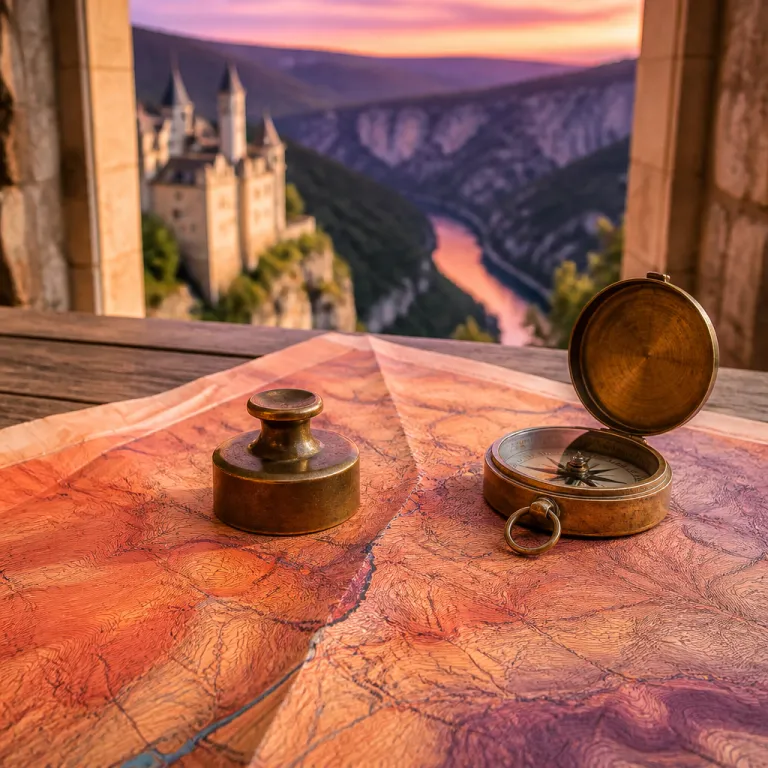
From heritage castle to strategic case study for destinations
Section overview: This opening section explains why Château de la Caze, a medieval castle converted into a boutique château-hotel, has become a reference case for destination managers working on the Gorges du Tarn.
The Atair case built around Château de la Caze shows, in operational terms, how a medieval castle hotel can anchor a territorial strategy in the Gorges du Tarn. This late 15th century château, now a boutique property on the banks of the Tarn river, illustrates how governance choices by local authorities and private owners can align preservation, hospitality and regional branding. For offices de tourisme and regional agencies, this single historic monument in the Sainte-Enimie – La Malène corridor becomes a living laboratory for managing heritage assets within a fragile river valley ecosystem, with the Atair analysis drawing on interviews with the hotel management team and local élus.
Château de la Caze stands in a dramatic setting between Sainte-Enimie and La Malène, where the Gorges du Tarn narrow and limestone cliffs dominate the surrounding area. The castle was gradually restored as a château-hotel with 16 rooms and suites, integrating modern facilities such as a heated swimming pool, spa and gourmet restaurant while maintaining stone façades, vaulted rooms and antique furniture. According to information published by the hotel and the official historic monument listing, this balance between architectural integrity and contemporary hotel services is central to the Atair analysis, because it demonstrates how heritage constraints can become a value proposition rather than a limitation.
For destination managers, the case study highlights how one château can structure a premium positioning for a wider area, from Causse Méjean to the lower Gorges du Tarn. The property operates as both a riverside hotel and a flagship for slow tourism, with spacious rooms and suites that encourage longer stays and higher local spend. As one tourism officer in Sainte-Enimie noted during the Atair fieldwork, “When visitors choose the château, they usually stay an extra night and explore more villages.” Offices de tourisme can use this castle hotel and its restaurant as a narrative anchor to connect river activities, hiking on the causses and visits to nearby villages such as Sainte-Enimie and La Malène, creating coherent itineraries that extend average stays in the Gorges du Tarn.
Aligning public and private interests around a river valley icon
Section overview: This part focuses on governance, showing how public authorities and private operators co-manage a sensitive river corridor and a listed historic monument.
The Atair case underlines how public authorities and private operators can co-manage a sensitive river corridor like the Tarn. The château sits directly on the riverbank, which means every decision about gardens, swimming pool placement or access to the water has implications for erosion, biodiversity and visitor flows. Offices de tourisme and collectivités must therefore treat this hotel-restaurant not as an isolated business, but as a strategic node in the Gorges du Tarn ecosystem that influences traffic between Sainte-Enimie and La Malène, especially during peak summer months when regional statistics show strong pressure on river access points.
In practice, the study shows that zoning rules, heritage protection orders and river management plans can be translated into concrete hotel design choices. The gardens and bathing areas have been landscaped to protect riverbanks while still offering guests direct swimming access to the Tarn, and the pool is heated but visually discreet to preserve the castle silhouette. This approach allows the property to operate as a full-service riverside hotel while respecting its status as a listed historic monument and maintaining the visual harmony of the surrounding area. For local élus, this becomes a reference when negotiating with other private actors along the Gorges du Tarn corridor, because it demonstrates that regulatory compliance can coexist with high-end hospitality.
Community-based tourism frameworks are also relevant here, because the project depends on strong ties with local artisans, guides and producers. Offices de tourisme can position the château restaurant as a showcase for short supply chains, while integrating canoe operators from the Sainte-Enimie – La Malène stretch and hiking guides from Causse Méjean into joint packages. For readers seeking a deeper benchmark on participatory models, the analysis on community-based tourism beyond the brochure offers useful parallels for structuring governance around a flagship château-hotel and for measuring its contribution to local value creation.
Designing high value experiences around rooms, suites and river landscapes
Section overview: This section examines how the configuration of rooms, suites and outdoor spaces supports premium positioning, longer stays and diversified segments, including small meetings and incentive groups.
The Atair case illustrates how product design at the scale of rooms and suites can support a destination strategy for the Gorges du Tarn. Each bedroom in the château combines antique furniture with contemporary comfort, turning historic monument constraints into a storytelling asset that justifies premium pricing. Offices de tourisme can leverage this by promoting thematic stays that link specific rooms in the castle to curated experiences on the Tarn river, such as dawn canoe outings between Sainte-Enimie and La Malène or guided visits to Causse Méjean plateaus, and by highlighting the contrast between intimate château interiors and wide open river landscapes.
From a hospitality perspective, the study demonstrates that the mix of suites, standard rooms and landscaped gardens with swimming areas can be calibrated to extend average stays. Guests who book larger suites with river views are more likely to use the swimming pool, terrace restaurant overlooking the gorges and wellness facilities, which increases ancillary revenue and supports local employment. Regional tourism statistics cited in the Atair report show that properties with this type of diversified offer tend to record higher occupancy in shoulder seasons. For regional agencies, this makes the château a concrete example of how investment in high quality facilities can mitigate tourism workforce shortages, a topic analysed in depth in this study on tourism workforce gaps and destination responses.
Meetings and incentive segments also benefit from the Atair case, even if the property remains primarily leisure oriented. Small executive retreats can privatise suites and use the château gardens for strategic workshops, while the restaurant offers a controlled environment for high level networking. Tourism boards looking at MICE positioning can draw parallels with the practices described in the benchmark on MICE excellence for regions and tourism boards, adapting them to the more intimate scale of a rural riverside hotel embedded in a protected valley, and using Château de la Caze as a pilot site for high value, low impact corporate events.
Integrating Château de la Caze into wider territorial itineraries
Section overview: Here the focus shifts from the property itself to its role as a hub within multi-day itineraries, low-impact mobility schemes and thematic routes across the Gorges du Tarn.
The Atair case proves that a single château can structure multi-day itineraries across a wide area of the Gorges du Tarn. Offices de tourisme can position the castle as a central hub, with radial routes towards Sainte-Enimie, La Malène, Causse Méjean and the upper Tarn Sainte sector. By mapping stays that combine nights in the château-hotel with activities on the riverbanks and visits to nearby villages, destination managers can smooth visitor flows and reduce pressure on the most saturated viewpoints, while also encouraging guests to discover lesser-known hamlets and viewpoints identified in regional visitor flow studies.
One practical lesson from the case is the importance of coordinating transport information and booking channels. The nearest train station is Banassac – La Canourgue, around 30 km away by road, which means that shuttle services, taxi partnerships and clear wayfinding from Sainte-Enimie and the La Malène sector are essential to make the hotel-restaurant accessible without private cars. Offices de tourisme can integrate this data into their digital platforms and printed maps, presenting Château de la Caze not only as a castle with a swimming pool and panoramic terrace, but as a gateway to low-impact mobility along the Tarn river corridor, in line with regional objectives for reducing car dependency.
Regional agencies can also use the Atair case to structure thematic routes around heritage and gastronomy. A circuit might link the château with Maison Martine style guesthouses in nearby hamlets, creating a network of complementary riverside hotels and maison d’hôtes offers. By aligning communication and cross-referencing these accommodations in destination brochures, these actors can present a coherent narrative of historic monuments, river landscapes and local cuisine, which encourages longer stays and higher per capita spending in the surrounding area and reinforces the Gorges du Tarn brand as a high value, low density destination.
Governance, data and long term preservation of a historic monument
Section overview: This section details how monitoring tools, heritage regulations and restoration choices ensure the long term preservation of the château while supporting its role as a hotel-restaurant.
The Atair case highlights how governance tools and data can support the long term preservation of a listed historic monument. The castle was built in the late 15th century and later classified as a protected site by the French authorities, which imposes strict rules on any modification to rooms, suites or gardens. For collectivités and élus, this means that every investment in hotel facilities, from the swimming pool to the château kitchen, must be evaluated not only for economic return but also for its impact on the architectural integrity of the building, as documented in the official protection file and in regional planning documents.
Destination managers can use the case to refine their monitoring frameworks. Indicators might include the number of nights spent in the château compared with external accommodations in Sainte-Enimie or La Malène, the share of guests using the landscaped swimming areas versus the Tarn river itself, and the proportion of restaurant clients who are non-residents. These data points help offices de tourisme understand how the property influences visitor behaviour across the Gorges du Tarn and whether it contributes to or alleviates pressure on sensitive riverbank zones, especially during periods when occupancy rates approach regional capacity thresholds.
Heritage preservation techniques used at Château de la Caze also offer a replicable model for other castles in the area. The integration of modern services such as a heated pool and spa has been achieved without altering the main volumes of the historic monument, and antique furniture has been restored rather than replaced. For regional agencies, the Atair case therefore becomes a reference dossier when negotiating with owners of other château-hotels who wish to upgrade their facilities while remaining aligned with conservation objectives, and when compiling comparative studies on the economic impact of restored heritage properties.
Lessons for offices de tourisme and regional agencies from the Atair case
Section overview: This penultimate section synthesises the main operational lessons for public and private stakeholders, from positioning and product design to partnership models.
The Atair case at Château de la Caze offers several operational lessons for offices de tourisme, development agencies and private tourism actors. First, it shows that a heritage château on the banks of the Tarn can be positioned as a flagship product that elevates the entire Gorges du Tarn brand, provided that communication emphasises both the castle’s history and its contemporary hotel services. Second, it demonstrates that careful design of rooms, suites, gardens and swimming pool areas can reconcile guest expectations with strict environmental and heritage constraints in the surrounding area, turning potential conflicts into opportunities for differentiation.
For governance bodies, the case confirms the value of structured partnerships with private operators. Local artisans and preservation societies have contributed to the restoration of antique furniture and stonework, while the hotel restaurant sources ingredients from producers in Sainte-Enimie, La Malène and the wider Tarn Sainte hinterland. As one regional tourism official summarised during stakeholder workshops, “We treat Château de la Caze as both a monument to protect and a tool for structuring the destination,” which encapsulates the alignment between individual stays and the broader development strategy and echoes the principles set out in regional tourism development plans.
Finally, the Atair case underscores the importance of narrative coherence across all touchpoints. Offices de tourisme can frame the château as a starting point for exploring Causse Méjean plateaus, canoeing between Sainte-Enimie and La Malène, or visiting other historic monuments along the Tarn river. By doing so, they transform a single castle hotel with a gourmet restaurant and landscaped gardens into a strategic lever for sustainable growth, cultural preservation and high value tourism in the wider Gorges du Tarn area, while also providing a concrete example for other destinations seeking to integrate heritage hotels into their territorial strategies.
Key figures from the Atair case at Château de la Caze hotel
Section overview: This final section summarises core quantitative indicators that underpin the case study and can be reused in destination marketing or planning documents.
- Château de la Caze offers 16 rooms and suites, which positions it as a small scale, high value riverside hotel rather than a mass market property, according to data published by the hotel itself and consolidated in the Atair case study.
- The castle was originally built in the late 15th century and later listed as a historic monument, which means more than five centuries of architectural heritage are now integrated into a modern hotel-restaurant product in the Gorges du Tarn and formally recognised in national heritage inventories.
- The nearest railway access point is Banassac – La Canourgue station, located about 30 km from the château by road, which underlines the need for coordinated last mile transport solutions managed by offices de tourisme and local authorities, especially during high season when regional mobility statistics show increased demand.
- The property combines a heated swimming pool, spa, private river beach and gourmet restaurant, illustrating how multiple facilities can be concentrated within a single château while still respecting conservation rules in a protected river valley and contributing to higher average spend per visitor.
FAQ about the Atair case at Château de la Caze hotel
What type of accommodation does Château de la Caze offer ?
Château de la Caze operates as a boutique castle hotel in the Gorges du Tarn, offering 16 rooms and suites within a restored 15th century building. The bedrooms combine antique furniture with modern amenities, and several suites overlook the Tarn river and the surrounding landscaped gardens. This configuration makes the property a reference case for heritage-based hospitality in the Sainte-Enimie – La Malène sector and a flagship example in the Atair study.
Which amenities are available on site for guests ?
The property provides a heated swimming pool, spa facilities, a private river beach and a gourmet restaurant serving regional cuisine. These services are integrated into the historic monument in a way that preserves the castle’s architecture while meeting contemporary expectations for comfort and wellness. For destination managers, this mix of facilities illustrates how to enhance guest experience without compromising heritage values and supports the premium positioning of the Gorges du Tarn.
How can visitors reach Château de la Caze without a private car ?
The closest train station is Banassac – La Canourgue, located roughly 30 km from the château in the Gorges du Tarn area. From there, visitors typically rely on taxis, private transfers or seasonal shuttles coordinated by local offices de tourisme and collectivités. Clear communication about these options is essential if the Atair case is to support low carbon mobility goals along the Tarn river corridor and align with regional transport strategies.
Why is Château de la Caze considered a strategic asset for the destination ?
Because it is both a listed historic monument and a high end riverside hotel, Château de la Caze acts as a flagship for the wider Gorges du Tarn brand. Its rooms, suites, terrace restaurant and riverside gardens attract visitors who are willing to stay longer and spend more in Sainte-Enimie, La Malène and neighbouring villages. This makes the Atair case a key reference for offices de tourisme and regional agencies seeking to align heritage preservation with economic development and to structure premium itineraries around a single château-hotel.
What lessons can other château hotels draw from this case ?
Other castle properties can look to the Atair case for guidance on integrating modern services such as a swimming pool, spa and gourmet restaurant into protected buildings. The project shows that working closely with preservation societies, local artisans and public authorities allows owners to upgrade facilities while maintaining architectural integrity. It also demonstrates how a clear narrative around history, landscape and hospitality can position a château as a central asset in regional tourism strategies and as a catalyst for community-based tourism.