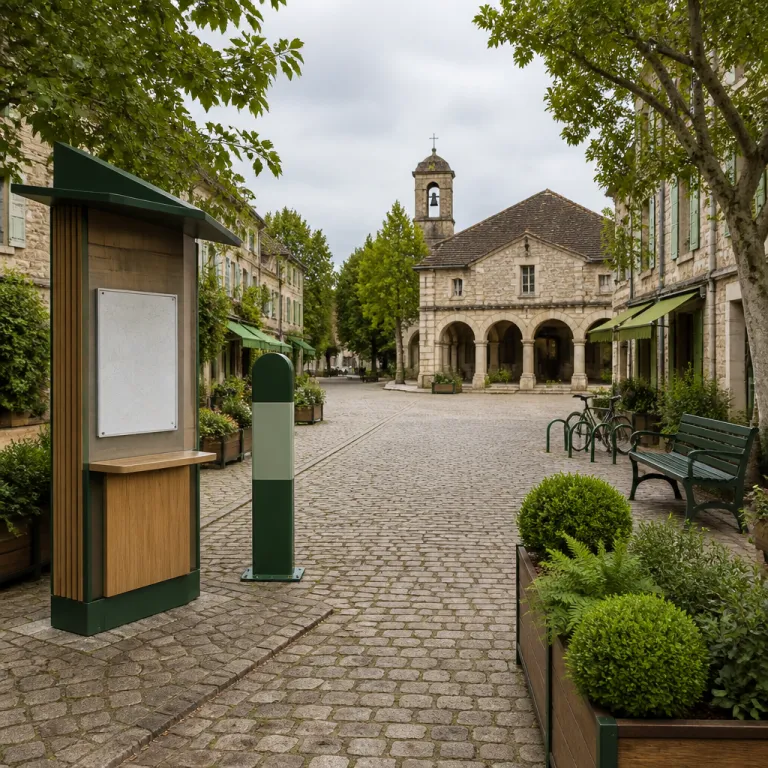
Why small towns of France need a distinct destination brand
Across France, every historic market town and rural village competes for attention against iconic cities such as Paris, Lyon, or Bordeaux. For tourism offices and regional agencies, the challenge is to position these smaller destinations without diluting what makes each place unique. In a crowded marketplace, a clear destination branding strategy is now as critical as transport access, accommodation capacity, or cultural programming.
The network Petites Cités de Caractère already shows how a shared label can spotlight beautiful villages and small city centres with remarkable heritage. According to official Petites Cités de Caractère figures, there were 193 labelled towns in 2023, each demonstrating that a strong narrative around heritage site value, half-timbered architecture, or UNESCO heritage status can shift visitor flows from major hubs toward lesser-known towns in France. When you frame a small town as a curated experience rather than a secondary stop, you change both visitor expectations and local political support.
Branding work must start from the ground, literally in the streets lined with history and daily life. In many provincial towns, visitors will find compact centres where the streets are walkable, the wine bars are close to the main square, and the church of Notre Dame or a chapel of Saint Jean anchors the skyline. As one tourism director in Normandy put it in a 2022 Atout France workshop, “Our brand begins on the pavement, not on the poster.” These tangible assets allow you to position each small city or village as a beautiful, human-scale alternative to the anonymous big-city break.
From postcard clichés to territorial narratives rooted in place
Many campaigns about the small-town France experience still rely on generic images of a charming village and a glass of wine. For destination strategists, the real task is to move beyond clichés and build narratives that connect each town to its wider region and to specific visitor motivations. That means articulating why a particular locality is the right place to visit for culture, gastronomy, or slow travel rather than simply stating that it is beautiful.
In Burgundy, for example, a town surrounded by vineyards can be branded as a gateway to the wider Bourgogne wine culture, while nearby villages in France can be positioned as quiet bases for cellar visits and cycling routes. In the Champagne region, a small city with a cathedral of Notre Dame and streets lined with maisons de Champagne can be framed as the interpretive centre of the appellation, while surrounding beautiful villages become the living landscape of production. This approach mirrors how food-led destinations use culinary storytelling, as shown in strategic analyses of Italian cuisine for destination strategists that link dishes to regions, producers, and rituals.
For coastal territories, a village sur mer or a place like Villefranche sur Mer can be branded not only for its bay but also for its layered history, from fishing to modern art. Inland, a town such as Saint Rémy Provence can be positioned around Roman remains, artists, and Provençal markets, while nearby beaux villages and Les Baux de Provence form a cluster narrative. When each town and its neighbouring villages share a coherent story, regional campaigns gain depth and avoid presenting the small towns of France as interchangeable postcards.
Designing visitor journeys that make small towns the main destination
Too often, small French towns appear in brochures as a half-day detour from a major city. To change this, tourism offices must design and promote complete visitor journeys where the small town or cluster of villages is the primary base. This requires aligning accommodation, mobility, and cultural programming so that a visitor can comfortably stay several nights in a single town.
Walking tours, guided visits, and self-exploration routes are powerful tools when they are structured as thematic circuits that start and end in the same small city. A heritage site trail might link a half-timbered quarter, a church of Saint Jean, and a local museum about Joan of Arc or regional resistance, with wine tasting or market stops in between. When these circuits are mapped digitally and promoted through local apps, maps, and guidebooks, visitors will find it easier to plan a road trip that strings together several towns in France without defaulting to the nearest big city.
Destination managers can also integrate rural towns into longer cross-regional itineraries that still keep them central. A road trip through Normandy might connect Rouen, with its cathedral and Joan of Arc heritage, to coastal villages sur mer and inland beaux villages, each presented as a distinct stage. In Provence, a loop between Saint Rémy Provence, Les Baux, and coastal Villefranche sur Mer can be framed as a journey through art, light, and Mediterranean streets lined with cafés. Strategic insights from work on Mexican food for tourism offices show how thematic routes anchored in local culture increase both length of stay and visitor spending when they are clearly branded and easy to book.
Digital engines for territorial promotion in small town contexts
Branding small-town destinations now depends as much on digital visibility as on physical signage. For offices de tourisme, the priority is to transform static brochures into dynamic content ecosystems where each town, village, and small city has a clear role and personality. This means investing in structured data, high-quality photography, and multilingual storytelling that reflects the real experience on the ground.
One effective approach is to treat each town as a node in a wider digital map of the region, where users can filter by themes such as beautiful villages, UNESCO heritage, wine routes, or Christmas markets. A case study on how a Dordogne France map becomes a digital engine for territorial promotion illustrates how layered cartography can guide visitors from a main city to surrounding small-town communities. When users can zoom from a regional view down to specific streets lined with half-timbered houses or to a chapel of Notre Dame, they better understand why they should visit that particular place.
Digital storytelling should also highlight seasonal experiences that differentiate small communities from larger cities. During the Christmas period, for example, a town with a historic square and traditional market can be promoted as an intimate alternative to crowded metropolitan events, especially if the streets are decorated and local choirs perform near Saint Jean or Notre Dame churches. By integrating booking tools, event calendars, and transport information, tourism offices will find that visitors are more willing to base a full road trip around a cluster of small towns rather than using them as brief stops.
Leveraging labels, heritage, and networks for stronger brands
Labels and networks give small towns of France a powerful starting point for destination branding. The Petites Cités de Caractère label, UNESCO heritage inscriptions, and national designations such as Plus Beaux Villages de France all provide external validation that can reassure visitors and investors. For tourism offices, the key is to integrate these labels into a coherent narrative rather than treating them as isolated logos.
A town with UNESCO heritage status can position itself as a cultural anchor for its region, while nearby beautiful villages and small city centres benefit from spillover visits. In practice, this means designing joint campaigns where a main heritage site is presented alongside lesser-known villages in France that share similar architecture, landscapes, or wine traditions. A fortified town in Burgundy, for example, can collaborate with surrounding beaux villages and wine-producing communes to create a shared story about medieval trade, vineyards, and contemporary gastronomy.
Networks also help smaller places negotiate with transport operators, tour operators, and digital platforms. When several towns in France coordinate their messaging, they can promote thematic clusters such as coastal villages sur mer, hilltop towns around Les Baux, or riverfront quarters in Rouen and other cities. This collective approach supports the long-term context of preserving and promoting small towns' heritage while boosting tourism and supporting local economies, as highlighted by the growing interest in rural tourism and authentic experiences.
Governance, residents, and private partners in destination branding
Effective branding for small towns of France is never only a communication exercise. It is a governance project that requires alignment between elected officials, tourism offices, development agencies, and private actors such as hoteliers, wine producers, and cultural associations. Without this shared vision, even the most beautiful campaign will fail to translate into coherent on-site experiences.
Local residents must recognise themselves in the way their town or villages are presented to the world, especially in places with strong identities such as Rouen, Saint Rémy Provence, or Villefranche sur Mer. When branding emphasises half-timbered houses, wine cellars, or Christmas markets, it should reflect real practices and not staged events created only for visitors. This authenticity is crucial in towns in France where the streets lined with daily life, from schools to bakeries, are part of the attraction for travellers seeking small-scale, human encounters.
Private partners can also extend the brand through their own channels and products. A wine estate in the Champagne region, a guesthouse in a beautiful village sur mer, or a museum dedicated to Joan of Arc can all carry the same visual identity and narrative themes defined by the tourism office. As one reference from Petites Cités de Caractère guidance notes, “A small French town with remarkable heritage” can join a network of “193 towns as of 2023”, many of which are accessible by public transport. When everyone from the mairie to the smallest café uses consistent messages, visitors will find it easier to plan a road trip that links several small-town destinations into a memorable itinerary.
Key figures and strategic indicators for small town destination branding
- There are 193 Petites Cités de Caractère across France, giving tourism offices a substantial existing network of labelled small towns to integrate into regional branding strategies (source: Petites Cités de Caractère, official data, 2023).
- Rural and small-town tourism has recorded sustained growth in recent years, driven by demand for authentic experiences and cultural heritage, which reinforces the strategic value of investing in beautiful villages and small city centres as primary destinations (source: national tourism observatories and Atout France rural tourism briefs, 2019–2023).
- Many labelled small towns are accessible by public transport, which allows regions to promote low-carbon road trip alternatives that combine trains, local buses, and walking circuits rather than private car-only itineraries (source: Petites Cités de Caractère guidance on accessibility, updated 2022).
- Heritage tourism, including visits to UNESCO heritage sites and historic quarters with half-timbered architecture, represents a significant share of international arrivals to France, underlining the potential of small towns of France to capture higher-value cultural segments (source: Atout France cultural tourism reports, 2020–2023).
FAQ about branding small towns of France
What defines a small French town with strong tourism potential ?
A small French town with strong tourism potential usually combines a compact historic centre, identifiable heritage assets such as a church of Notre Dame or Saint Jean, and walkable streets lined with cafés, shops, and cultural venues. When these elements are supported by basic services, accommodation, and access to the wider region, the town can be positioned as a standalone destination rather than a simple stopover. Labels such as Petites Cités de Caractère or Plus Beaux Villages de France often confirm this potential.
How can tourism offices differentiate similar looking villages France ?
Tourism offices can differentiate villages France by focusing on specific stories, people, and practices rather than only on architecture. One village might emphasise its wine-making traditions, another its role in regional history, and a third its Christmas market or artistic community. By anchoring each beautiful village in a clear narrative, regional campaigns avoid presenting all small towns of France as identical.
Are small towns suitable bases for longer stays and road trips ?
Many small towns of France are excellent bases for longer stays and themed road trip itineraries. A well-connected small city in Burgundy or the Champagne region can offer services, restaurants, and cultural venues, while nearby villages and heritage sites provide day trip options. When tourism offices coordinate transport information and digital maps, visitors will find it easier to plan multi-night stays in these towns.
How important are digital tools for promoting small town destinations ?
Digital tools are now central to promoting small town destinations because most visitors research and book their trips online. Interactive maps, storytelling-rich websites, and local apps that highlight beautiful villages, UNESCO heritage, and seasonal events help small towns of France compete with major cities. Structured data and consistent branding across platforms also improve visibility in search results and on travel planning tools.
What role do local residents play in destination branding ?
Local residents play a decisive role because their daily use of streets, markets, and public spaces shapes the visitor experience. When residents support the brand narrative and participate in events, markets, or cultural associations, the town feels authentic and welcoming. Tourism offices that involve inhabitants in co-creating the brand for their town or villages usually achieve stronger, more resilient positioning.