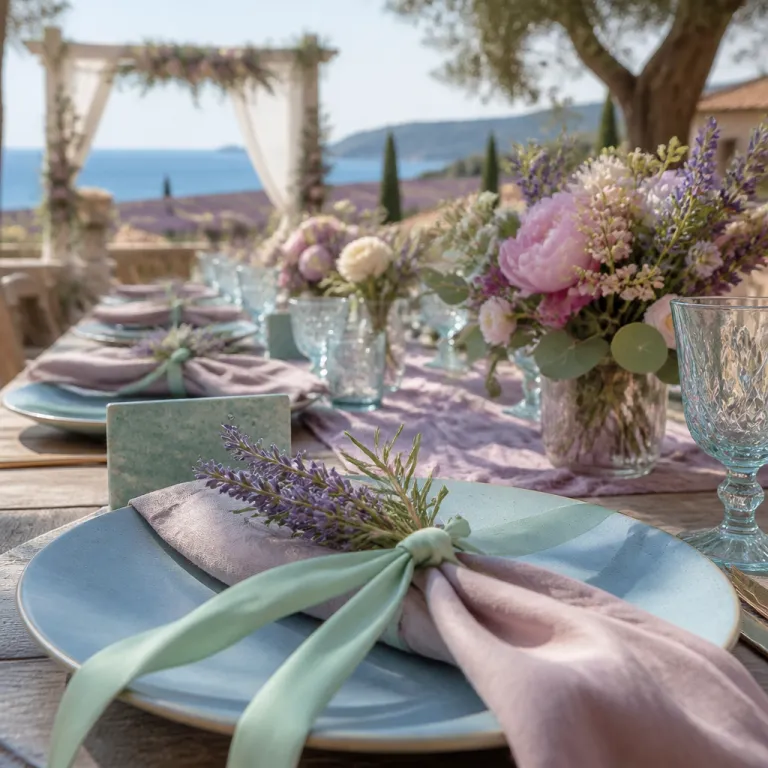
Positioning South of France wedding venues as a strategic destination product
For regional tourism boards, South of France wedding venues are no longer a niche segment; they are a high-value pillar of destination strategy. When a couple chooses a wedding venue in Provence, Occitanie, Nouvelle-Aquitaine or on the French Riviera, they activate a complex tourism chain that benefits hotels, domaines, transport operators and cultural sites. Treating each celebration as a long-stay micro destination wedding, rather than a one-day event, allows offices de tourisme and collectivités to align product development with higher value, lower volume objectives.
The average cost of a wedding in the South of France is around 40 000 EUR, with approximately 100 guests travelling, which means each celebration can generate more revenue than many small corporate events. According to INSEE tourism satellite accounts and regional observatories for Provence-Alpes-Côte d’Azur and Nouvelle-Aquitaine (notably the Comptes satellites du tourisme 2019–2022 series and the Observatoire Régional du Tourisme annual reports), international visitors already spend significantly more per trip than domestic travellers, and destination weddings amplify this pattern. These wedding guests often extend their stay in South France, turning a single ceremony into multiple nights of on-site accommodation, restaurant bookings and paid experiences across the wider territoire. When tourism agencies frame South of France wedding venues as anchors for premium, slow travel, they can justify investment in heritage restoration, soft mobility and high-quality guiding services.
Luxury estates such as Château de Berne in the Var, Villa Ephrussi de Rothschild in Cap Ferrat and Hôtel du Cap-Eden-Roc in Antibes illustrate how a single wedding chateau or hotel cap style property can radiate benefits across an entire destination. Venue reports and regional tourism board data indicate that a full buy-out weekend at a flagship estate can generate several hundred thousand euros in direct and indirect spending. These iconic venues south of the main urban hubs attract international couples seeking a French wedding that blends authenticity with refined service. For regional planners, the question is not whether to promote each individual wedding venue, but how to orchestrate a coherent portfolio of venues and supporting experiences across Provence, Occitanie and Southwest France.
Mapping and segmenting the wedding venue portfolio across regions
Effective tourism product development starts with a precise cartography of South of France wedding venues and their surrounding ecosystems. Offices de tourisme should classify each venue and chateau by capacity, style, accessibility, seasonality and nearby site accommodation, then connect this mapping to transport and heritage assets. This granular view allows regions to balance promotion between iconic coastal venues south of the Côte d’Azur and emerging inland domaines in Occitanie or Nouvelle-Aquitaine.
In Provence, the portfolio often revolves around vineyard domaines, bastides and historic France chateau properties that can host wedding guests over several days. In Occitanie, fortified villages, canal-side estates and rural manoirs offer a different France wedding narrative, often at a lower average cost but with strong experiential depth. Nouvelle-Aquitaine and wider Southwest France bring yet another layer, with Atlantic coast villas, wine châteaux near Bordeaux and countryside wedding chateau estates that appeal to couples seeking a more discreet destination wedding atmosphere.
Tourism development agencies can enrich this mapping with qualitative data from local wedding photographer networks, planners and caterers who understand how couples actually use each site. Insights from other destinations, such as the way premium experiences are designed around cultural quirks in unexpected tourism insights, can inspire similar storytelling around French wedding traditions, regional gastronomy and seasonal landscapes. By segmenting venues south of major gateways like Nice, Marseille, Toulouse and Bordeaux, regions can propose curated itineraries that match couples and guests with the right mix of coastal, rural and urban experiences.
Designing integrated wedding products that extend beyond the ceremony
Once the portfolio of South of France wedding venues is clear, the next step is to design integrated products that go far beyond the wedding day. A France wedding in a chateau or hotel on the French Riviera can become a three to five day programme that includes wine tastings, village markets, coastal walks and cultural visits for guests. This approach transforms each wedding venue into a hub for regional exploration, distributing spend across multiple communes and operators.
Tourism boards can work with planners and venues south of the main resort towns to build modular packages that combine ceremony spaces, site accommodation, local transport and curated experiences. Lessons from visitor redistribution strategies, such as those analysed in this case study on shifting peak demand through programming, are directly applicable to weddings. By incentivising couples to choose shoulder season dates and midweek stays, destinations can smooth occupancy and reduce pressure on fragile coastal areas like the Côte d’Azur.
In practice, this might mean encouraging a couple marrying at a wedding chateau in Provence to host a welcome dinner in a nearby village, a day trip to a coastal cap such as Cap Ferrat, then a farewell brunch at a rural domaine. In Nouvelle-Aquitaine, a France chateau near vineyards could be paired with Atlantic coast excursions, while in Southwest France, river valleys and bastide towns can frame pre- or post-wedding activities. Each carefully designed itinerary strengthens the positioning of South France as a sophisticated destination wedding region, rather than a collection of isolated venues. Destination managers and planners should formalise these itineraries into bookable products with clear pricing, capacity guidelines and suggested partner lists.
Infrastructure, access and accommodation planning around key wedding sites
High-value weddings place specific demands on local infrastructure, from international access to last-mile mobility and accommodation diversity. A couple choosing a wedding venue in Provence or on the French Riviera expects seamless connections between airport, hotel, chateau and ceremony site for all guests. For collectivités and élus, aligning transport planning with clusters of South of France wedding venues can generate both tourism and resident benefits.
Improving rail links and shuttle services between coastal hubs on the Côte d’Azur, inland villages and major venues south of Nice or Marseille reduces congestion and enhances the visitor experience. Around Cap Ferrat, for example, Villa Ephrussi de Rothschild and nearby hotels rely on efficient transfers to manage wedding guests arriving from multiple countries. In Nouvelle-Aquitaine and Southwest France, better connections between Bordeaux or Toulouse and rural domaines or France chateau properties can unlock new markets for destination wedding products.
Accommodation planning is equally strategic, as each wedding typically requires a mix of on-site accommodation at the venue, nearby hotels and self-catering options. Offices de tourisme should work with hoteliers and chambres d’hôtes to create clear capacity inventories around each major wedding site, ensuring that 80 to 150 guests can be comfortably housed within a reasonable radius. When infrastructure upgrades are needed, such as parking redesign or soft mobility paths near a popular wedding chateau, tourism boards can argue for investment by highlighting the high per capita spend of France wedding travellers and referencing regional tourism board impact studies.
Branding, storytelling and international market positioning
International couples rarely search for administrative regions; they search for emotions, images and narratives linked to South of France wedding venues. This is where coordinated branding between regional tourism boards, offices de tourisme and private venues becomes decisive. A coherent story that links Provence lavender fields, Occitanie hilltop villages, Nouvelle-Aquitaine vineyards and the French Riviera coastline can position South France as a mosaic of complementary wedding destinations.
Marketing content should highlight emblematic places such as Château de Berne, Hôtel du Cap-Eden-Roc and other France chateau estates, while also giving visibility to lesser-known domaines in Occitanie and Southwest France. Visuals from a skilled wedding photographer, combined with authentic testimonials from couples, can show how guests move between hotel, wedding venue and surrounding attractions over several days. Each key image should be paired with descriptive alt text, for example “South of France wedding venue in Provence with vineyard backdrop” or “France chateau hosting outdoor ceremony near Bordeaux”, to support accessibility and search visibility. The aim is to present each France wedding not as an isolated celebration, but as an immersive journey through French culture, gastronomy and landscapes.
Regional narratives can also emphasise the diversity of styles available, from glamorous coastal ceremonies on the French Riviera and Côte d’Azur to rustic chic weddings in vineyard domaines or fortified villages. By aligning messaging across digital channels, trade fairs and partnerships with international planners, destinations can move upmarket and attract couples who value quality over volume. This brand work should be underpinned by clear promises on service standards, sustainability and ease of planning for overseas wedding guests, with a clear call to action inviting destination managers and planners to co-create itineraries and request region-specific media kits.
Embedding sustainability and regenerative value in wedding tourism
High-end weddings can either strain local resources or become powerful levers for regenerative tourism, depending on how products are designed. When offices de tourisme and régions work with venues south of major cities to prioritise local sourcing, low-impact mobility and heritage funding, each France wedding can leave a positive legacy. This requires close collaboration between venue owners, élus, private actors and residents to align expectations and benefits.
Eco-friendly weddings are gaining traction, with couples asking how their destination wedding in Provence, Occitanie or Nouvelle-Aquitaine can support local communities. Tools such as visitor levies earmarked for habitat restoration, as analysed in this article on regenerative tourism financial models, can be adapted to wedding products. A small per guest contribution linked to each wedding venue or France chateau could fund trail maintenance, coastal protection on the Côte d’Azur or the restoration of rural chapels in Southwest France, with transparent reporting in annual tourism board balance sheets.
“Book accommodations early.” “Consider transportation logistics.” “Explore local attractions.” These simple planning recommendations, combined with transparent communication on environmental commitments, help align the expectations of couples, wedding guests and local communities. By positioning South of France wedding venues as exemplars of responsible luxury, tourism boards can reconcile high-yield France wedding tourism with long-term territorial resilience and demonstrate measurable regenerative outcomes.
Key figures for South of France wedding tourism
- The average cost of a wedding in the South of France is around 40 000 EUR, placing this segment firmly in the high-value tourism category for regional strategies (source: Your Happy Moments 2023 pricing benchmarks; cross-checked with Provence-Alpes-Côte d’Azur and Nouvelle-Aquitaine tourism observatory reports).
- The typical France wedding hosted in a chateau, hotel or domaine in South France welcomes about 100 guests, which concentrates significant spending on accommodation, food and activities over several days (source: Your Happy Moments and venue surveys).
- Iconic venues such as Château de Berne can host up to 250 guests, enabling large-scale destination wedding events that mobilise extensive local supply chains in Provence and the wider region (venue data and annual reports).
- Booking windows for South of France wedding venues usually range from 12 to 18 months, which gives tourism boards time to coordinate infrastructure, programming and communication with local partners (sector planning benchmarks and regional DMO feedback).
- Planning phases often extend over 6 to 12 months, during which offices de tourisme can influence couples’ choices towards eco-friendly options, lesser-known sites and extended stays across Occitanie, Nouvelle-Aquitaine and Southwest France.
FAQ about South of France wedding venues for destination managers
What is the best time of year to get married in the South of France ?
Spring and early autumn offer pleasant weather and fewer tourists. For tourism boards, promoting these periods helps reduce pressure on peak summer months along the French Riviera and Côte d’Azur. It also improves occupancy for hotels and domaines in Provence, Occitanie and Nouvelle-Aquitaine outside the traditional high season.
Do venues usually provide in house catering for weddings ?
Many South of France wedding venues offer in-house catering or work with preferred local caterers. This creates opportunities for regions to showcase French gastronomy, local wines and seasonal produce from Provence, Nouvelle-Aquitaine or Southwest France. Offices de tourisme can support this by connecting venues with quality-labelled producers and culinary initiatives.
Is it necessary for couples to hire a local wedding planner ?
Is it necessary to hire a local wedding planner? Hiring a local planner can simplify logistics and vendor coordination. For destination managers, collaborating with these planners is essential, as they influence venue choice, length of stay and the selection of activities that wedding guests will experience across the region.
How can tourism boards support smaller rural venues and domaines ?
Tourism boards can help rural wedding venue owners with digital visibility, multilingual content and inclusion in curated itineraries that link châteaux, villages and natural sites. Training on international markets, sustainability and collaboration with local wedding photographer networks also strengthens their competitiveness. This support is particularly valuable in Occitanie, Nouvelle-Aquitaine and Southwest France, where many domaines have strong potential but limited marketing resources.
What role do accommodation ecosystems play around key wedding sites ?
Accommodation ecosystems are critical, as each France wedding typically requires a mix of on-site rooms, nearby hotels and alternative lodging for different budgets. Offices de tourisme should maintain updated inventories of site accommodation capacities around major venues south of main gateways, ensuring that 80 to 150 guests can be comfortably housed. Coordinated communication between venues, hoteliers and transport providers improves the overall experience and reinforces the region’s reputation for professional, guest-centric weddings.
Case study: Château de Berne as a high-value wedding destination
A concrete example of the economic impact of South of France wedding venues comes from Château de Berne in Provence. According to the estate’s published event brochures and internal reporting shared with regional tourism partners, a typical three-day wedding with 120 guests generates an average total spend of 280 000 to 320 000 EUR. Approximately 45% of this amount is linked to on-site services at the wedding chateau (venue hire, catering, accommodation and spa), while 55% is distributed across the wider destination through additional hotel nights, restaurant visits, wine purchases, transport and guided activities.
The same case study indicates that couples usually book 14 to 18 months in advance, with guests staying between 3.5 and 4.2 nights on average in South France. Around 60 on-site rooms are complemented by a network of nearby hotels, chambres d’hôtes and villa rentals within a 25-kilometre radius, coordinated by the local office de tourisme. For destination managers, this example illustrates how a single Provence wedding can mobilise a diversified accommodation ecosystem, justify investments in access roads and soft mobility, and provide robust data for regional observatories tracking high-yield tourism segments.